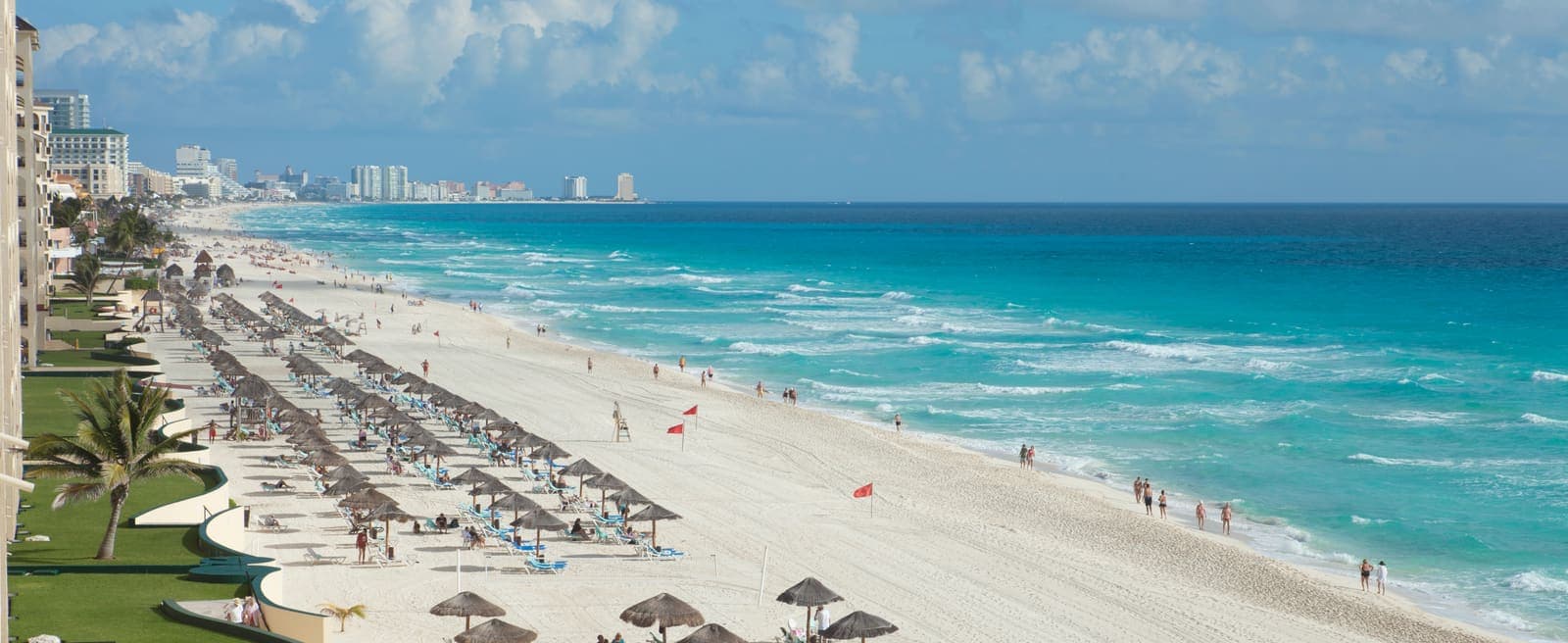
Cancún's business mix is heavily international — a Hotel Zone resort whose guests are 70% American and Canadian, a Tulum-ruins tour operator whose Spanish-language-only website costs them the bulk of the US visitor, a vacation-rental manager in Puerto Morelos catching Toronto buyers wanting to skip the OTA fees, a CUN-airport-transfer operator competing with three Uber-aggregators for the 4am arrival from Chicago. The shared problem is that the audience is mostly arriving in English, mostly paying with US- or Canadian-cards, and mostly checking their accommodation from a phone at the gate in O'Hare or Toronto Pearson — and most Cancún websites still ship as Spanish-primary with an OK English version, losing the visitor who's already 80% of the revenue.
Cancún agency rates run high for tourism-specific work — a custom build in 2026 typically runs MXN 55,000–250,000 with a maintenance retainer of MXN 4,000–12,000 a month on top, often quoted in USD for the international-investor-owned business. For a single 40-room resort, a four-vehicle tour operator, or a 20-property vacation-rental manager, that's the price of a season's Booking.com commission overhead or a year's Travel-Weekly trade-press appearance; the website has to genuinely earn its share.
We replace the agency-and-OTA-dependency dilemma with a fixed monthly Mexican-peso price (USD-equivalent shown on invoices for international-owned businesses). Design, hosting on a global edge network, your .mx or .com domain, ongoing, growth-driven design, bilingual EN/ES delivery (English-primary for the international flow, parity for the Mexican guest), and LFPDPPP-aware data handling — all in one bill. The site loads as fast for a Hotel Zone local on Telcel 5G as it does for a Chicagoan checking from a phone at O'Hare's gate B14.